Solar panels on trucks: A Viable business model validated by 1.3 million kilometers of data
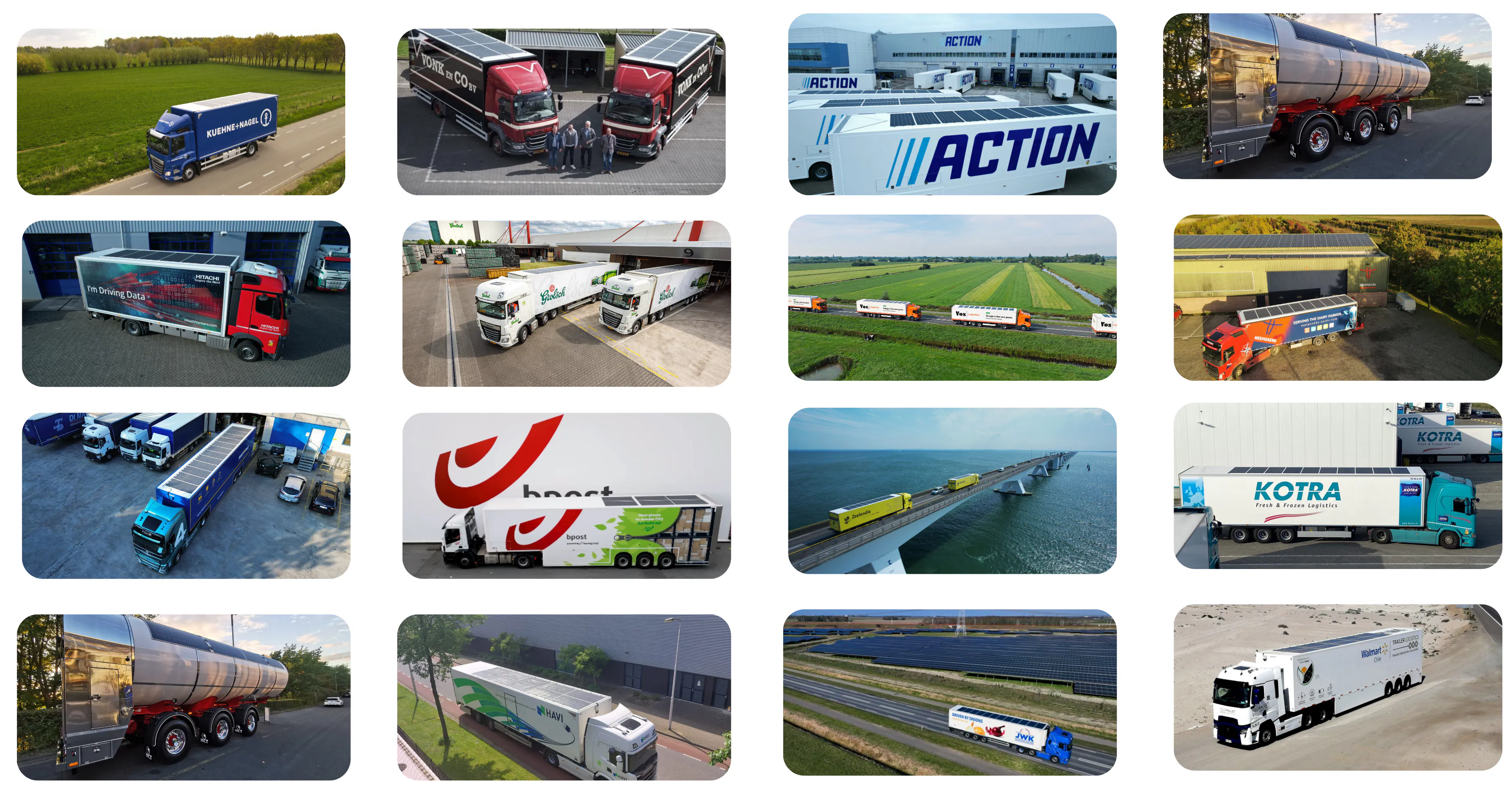
Solar is shifting from an innovation topic to a core business decision. Across Europe, solar-integrated trucks are delivering measurable returns for transport companies: 4–5% fuel savings, up to 9 tonnes of CO₂ reduction, and payback periods of around 1.5 years at current fuel prices. These results are proven in daily operations by transport companies using solar technologies such as SolarOnTop.
SolarMoves, the largest independent research on Vehicle Integrated Photovoltaics (VIPV), shows that by placing solar panels on top of commercial vehicles, trailers can generate up to 110 kWh per day while electric trucks can increase their daily range by up to 15%.
With over 1.3 million kilometers of monitored driving from the SolarMoves project, combined with years of real-world fleet data, this article answers the two main questions every transport company is asking:
- • Is the energy generated sufficient to deliver meaningful operational, financial and environmental value?
- • Can VIPV perform reliably in the demanding environment of commercial transport?
Field evidence: What transport companies are seeing
With more than 150 vehicles equipped with SolarOnTop and years of operational data collected, the results clearly show that the benefits are real. Customers are experiencing improvements in their finances, operations, environmental impact and even the well-being of their drivers.
Van der Linden transport
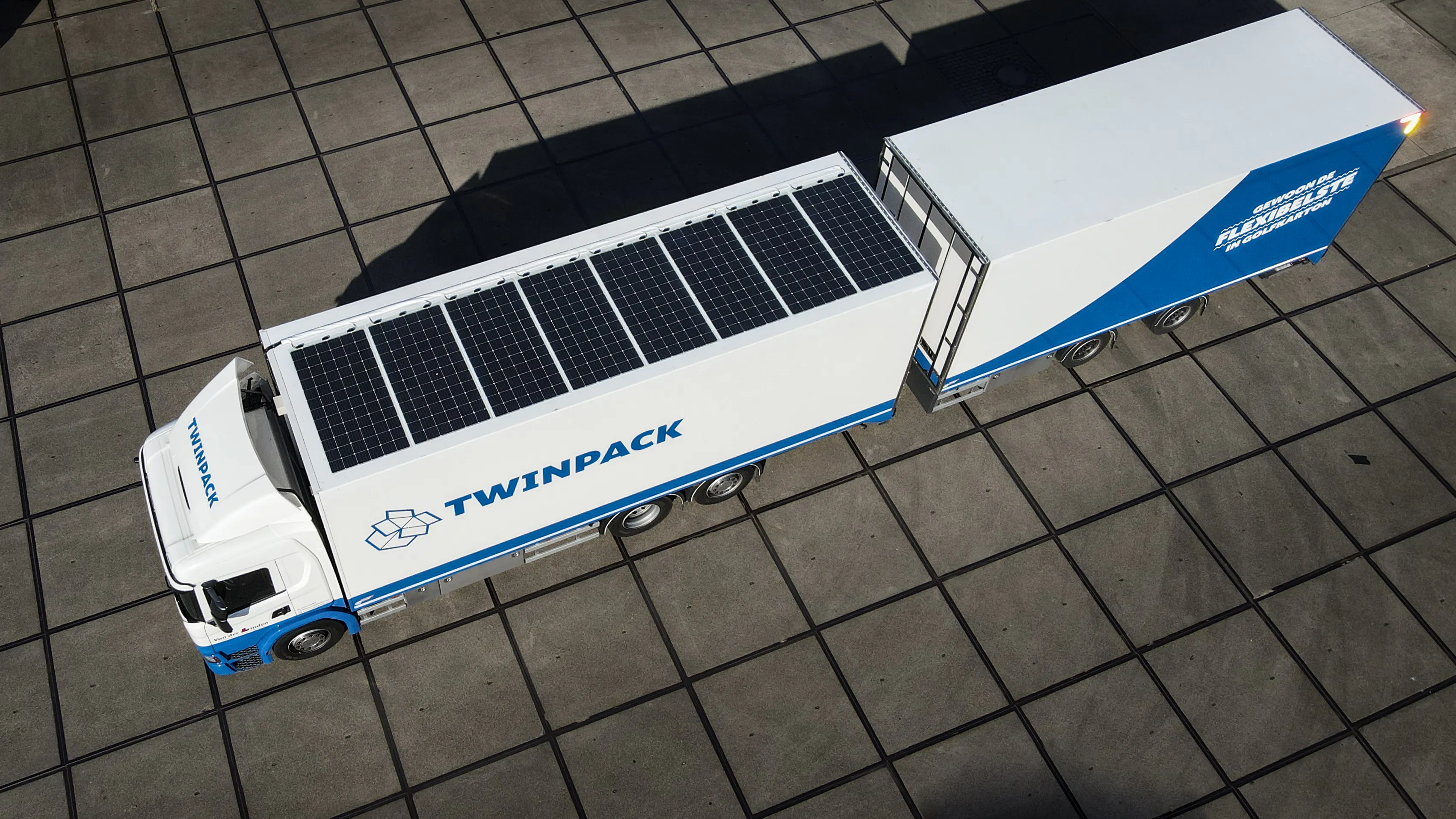
Based in Hillegom, Van der Linden was an early adopter of the SolarOnTop technology. Starting with one solar-equipped truck (Scania G370), the company quickly scaled up after seeing results. Solar energy generated from our technology was used to power electrical appliances such as:
- • Tail lifts
- • Air conditioning
- • Cabin electronics
By generating energy directly on the vehicle, electricity no longer needs to be produced by the alternator which reduces engine load and lowers fuel consumption.
Measured results:
- • ~4% fuel savings per truck
- • Reduced CO₂ emissions
- • Less battery wear and longer lifespan
- • Improved operational efficiency
“Will I get rich from it? No. But if it doesn’t help, it doesn’t hurt either. I earn back the investment over the lifetime of the trucks. And now, with high diesel prices, the payback period is shorter, making it a viable business model. We ensure that thanks to the solar panels on the roof, each truck saves about 4 percent on fuel consumption and CO₂ emissions. So we drive a bit more efficiently and greener. That’s also something our customers look at.”
- Van der Linden, Director, Frans Zoetmulder
Vonk and Co
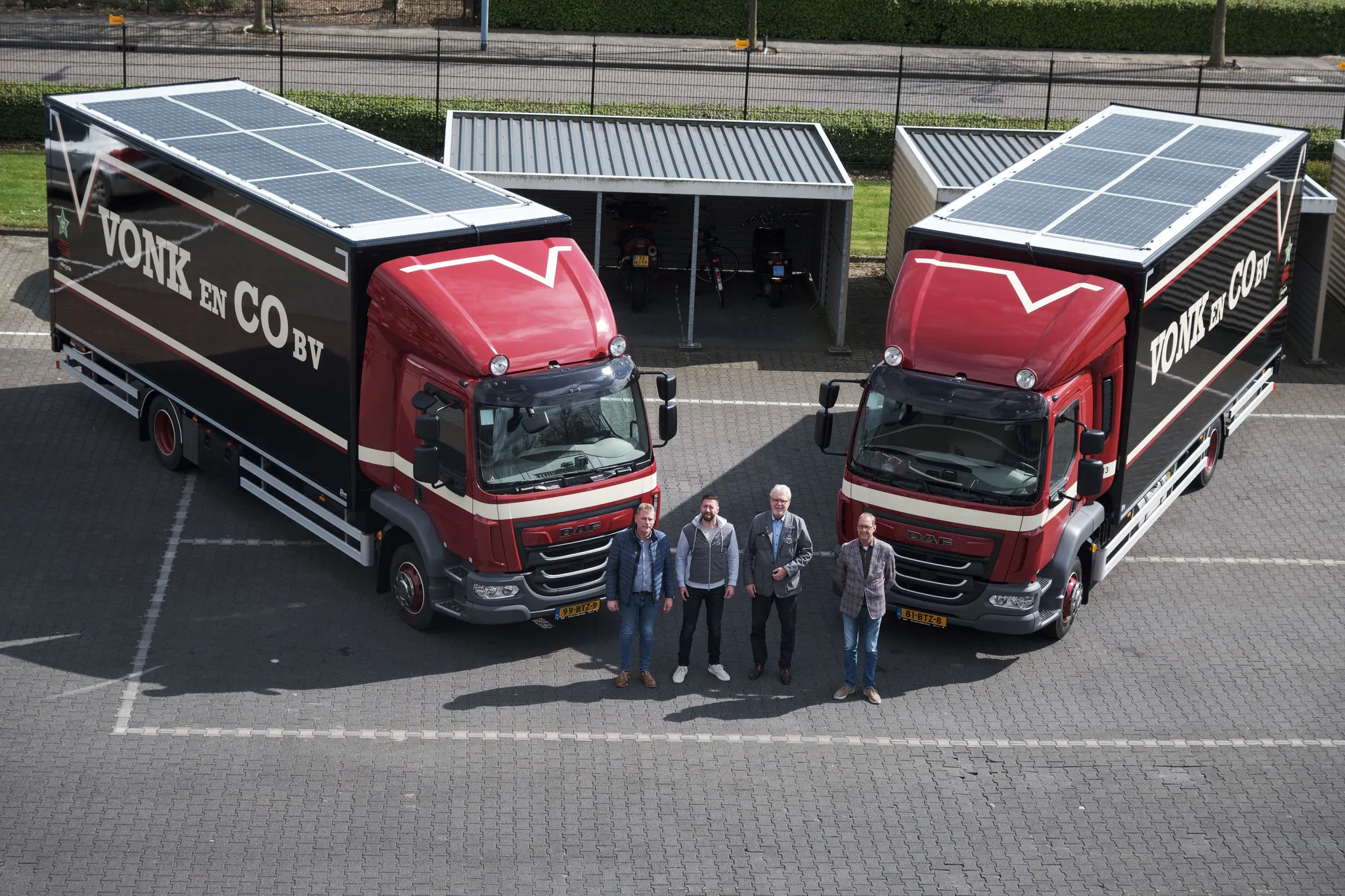
Vonk and Co started with two trucks, aiming to reduce fuel consumption and make its fleet more sustainable. Today, they operate five vehicles equipped with SolarOnTop, including modern DAF rigids.
The impact:
- • Each truck saves approximately 1.200 liters of diesel annually
- • At €2,50 per liter, that's €15.000 in annual fuel savings across the fleet
- • Meaningful CO₂ reduction
“Each truck saves about 1.200 liters of diesel per year. If you assume €2,50 per liter, we save €15.000 annually on fuel.”
- Vonk en Co, Stephan Vonk, CEO
Other customer experiences
Hitachi Transport: Achieves fuel savings of 1.284 liters/year/truck and CO₂ reduction of 4.147 kg annually/truck while also improving driver comfort, productivity and safety.
Van Rijnsbergen: Reports 1.672 liters of fuel saving/year/truck and 5.401 kg of CO₂ reduction/year/truck, alongside reduced idling and improved driver comfort and safety.
Vos Logistics: Achieves ~4–5% fuel savings /year/vehicle while also reducing battery wear and improving overall fleet efficiency.
Backed by the largest VIPV study in europe: SolarMoves
The SolarMoves project represents the largest independent study on VIPV in Europe, based on more than 1,3 million kilometers of real-world data. Vehicles from our customers such as Zeelandia, Hitachi, Van der Linden… and transport companies such as RD4, and DJ Middelkoop… were equipped with sensors to monitor performance in daily operations.
The results show that generating energy directly on vehicles significantly reduces reliance on external electricity and fuel especially in logistics operations with high auxiliary energy demand.
Key findings:
- • Electric trucks can increase their daily range by up to 15%
- • Trailers generate up to 55 kWh per day, and 90–110 kWh per day with side panels
- • Overall energy demand and grid pressure are reduced
This energy powers: Cooling units, Tail lifts and Auxiliary equipment
“Because it doesn’t rely on the alternator anymore, the engine works less, which reduces fuel consumption.”
- Lenneke Slooff, Research scientist at TNO.
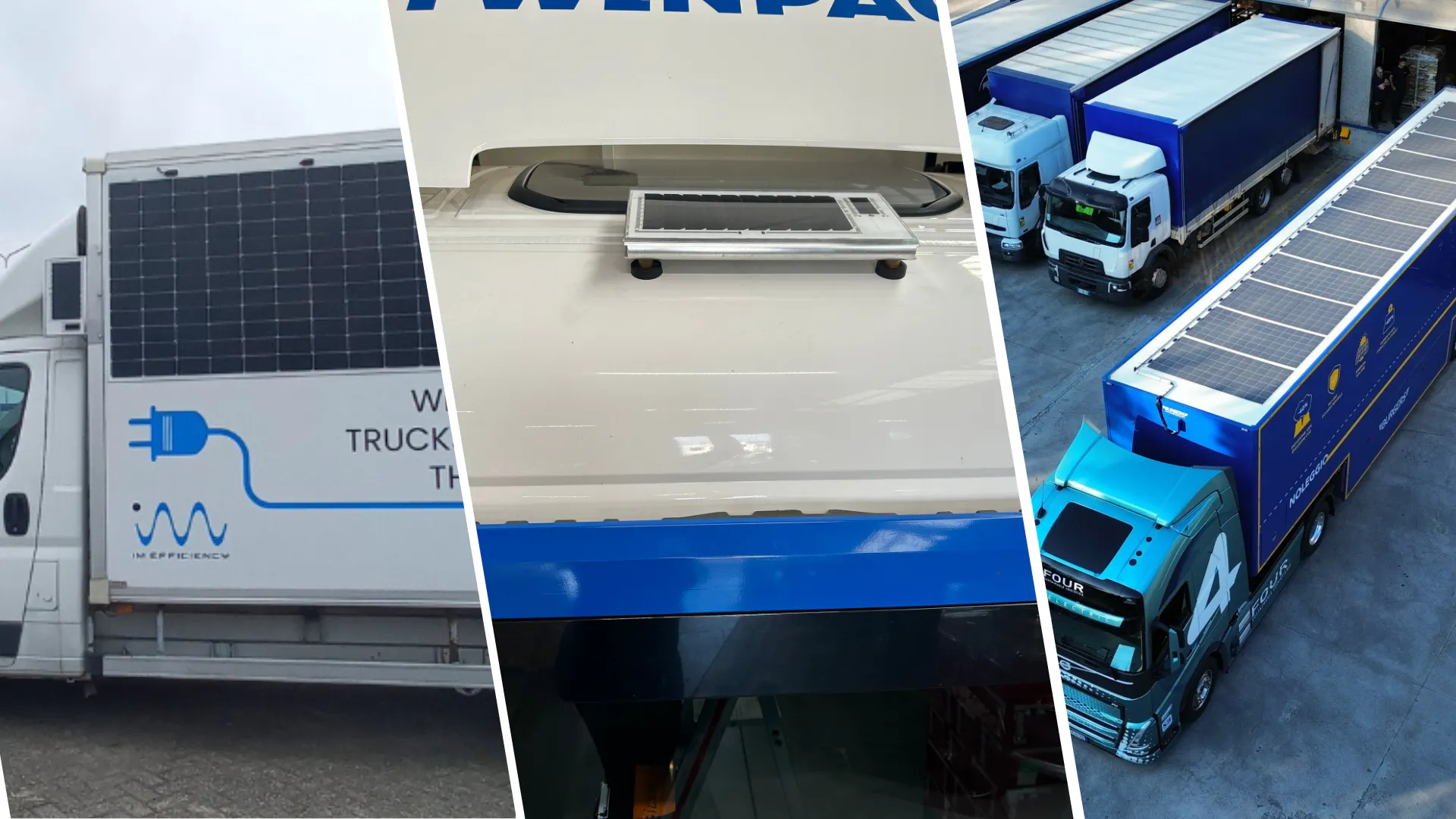
The Business Case: Investment vs Return
The economic impact of SolarOnTop comes from multiple sources:
- • Fuel savings
- • Lower maintenance costs (including reduced battery wear, fewer replacements and fewer breakdowns)
- • Reduced downtime
- • Fewer emergency call-outs
- • Stronger sustainability position that leads to higher customer satisfaction.
SolarOnTop systems previously had a payback period of 2.5 to 3.5 years. With rising fuel prices, this payback period has effectively been halved, making the business case even more attractive.
Beyond fuel savings: reliability and operational performance
Modern trucks rely on an increasing number of electrical systems. This makes energy reliability critical and essential to keep all electrical systems working properly.
Solar integration provides a second, independent energy source, ensuring electrical systems continue working without the engine power.
“Resilience, reliability and increased deployability are at least as important. Companies want their vehicles to continue loading and unloading and for the driver to keep using onboard systems.”
- Martijn Ildiz, CEO, IM Efficiency
Key operational benefits:
- • Reduced downtime
- • Increased vehicle availability
- • Continuous operation of critical systems
- • Less risk of electrical failures
Supporting electrification and reducing grid pressure
As transport electrifies, grid capacity is becoming a major bottleneck across Europe.
Solar-integrated vehicles offer a decentralized solution.
“By integrating solar panels into the roof, hood, and sides of vehicles, energy is generated where it is used. This reduces the need for space for sustainable energy, infrastructure, and grid expansion. In this way, VIPV contributes to reducing grid congestion and energy consumption.”
- Lenneke Slooff, Research scientist at TNO.
For electric trucks, the benefits are even greater:
- • Up to 10–15% increased driving range
- • Longer routes between charging
- • Less dependency on charging infrastructure
“We see that solar panels increase the driving range of electric trucks by 10 to 15 percent. Among others, Sligro already has a few running. They can stay on the road longer without needing to recharge. We are currently experimenting with that.”
- Martijn Ildiz, CEO, IM Efficiency
Driver Comfort and Productivity
Solar power also improves working conditions for drivers. We see that truck drivers working for our customers are happier and have a more comfortable experience, benefiting from lower noise levels, better rest and higher productivity.
This is very important for driver retention strategies, especially in today’s market, where there is a significant shortage of truck drivers.
“A driver no longer needs to run the diesel generator at night… That means less noise disturbance when trying to sleep.”
- Lenneke Slooff, Research scientist at TNO.
Want to see what this could mean for your fleet?
If you're looking to reduce fuel consumption without changing your operations, we’re happy to share real-world data and examples relevant to your fleet. Contact us to learn how SolarOnTop can support your fleet.
SolarMoves
SolarMoves is an international public-private consortium that aims to explore the potential of solar-powered vehicles to support the transition to an all-electric transport system in the EU.
The consortium includes prominent organizations in the field such as IM Efficiency, TNO (The Netherlands Organization for Applied Scientific Research), Fraunhofer Institute for Solar Energy Systems, Sono Motors and lightyear. This project comes at the behest of the European Commission's Directorate-General for Mobility and Transport (DG MOVE) to explore the potential of solar-powered vehicles and their impact on the electrical recharging infrastructure policy and regulations in Europe in the coming years.